Showing posts with label parsley. Show all posts

Friday, 20 April 2012

Herbs

I look forward to my new herb garden.  I especially look forward to having fresh coriander once again.  I still have a supply of coriander seeds, which I harvested and dried last year from our allotment.  Because it is such a strong herb, you only need a little bit - a few crushed seeds will flavour an entire casserole.  Unlike fresh coriander, dried seeds are good for casseroles - slow and long cooking recipes. Thyme is great for stews and sauces too - so I have a packet of thyme leaves ready to be planted this weekend. Hopefully we get the balcony-pot soil this weekend, some nice weather too, and all the herbs can be planted! (below is a photo from last year's out-of-control dill jungle)

I found that making herb butter is one of the best ways to ensure that I have plenty of herbs in supply well into winter.  Here are a few photos and a recipe I made in June 2010.   I made parsley butter, coriander butter and dill butter.

Directions: Wash and dry all herbs and check for any garden immigrants.  Chop herbs in a mixer or by hand - quite finely.
 Soften butter to room temperature butter, cube and add to the herbs. Add a dash of salt and for the coriander version I also added garlic.
Cool down the mixture a little and roll into sausages in grease-proof paper. Then put them in the freezer. Once frozen they can stay in the freezer for a while and then just slice pieces off with a sharp knife and add to whatever. 

Coriander seeds can be dried - place in an oven at a low temperature (~80-100 deg C) for a few hours.  If you pack them away without being completely dry they will rot and grow mold - as it happened to me first time I collected the seeds.  Thyme and rosemary can be dried too, but rosemary is fine to be stored in the freezer for a long periods without drying.  I wrap it in a damp kitchen paper towel and leave it in a Tupperware box.

Delia's ideas with herbs are quite inspiring.  She has a particularly good mixed-herb butter recipe with parsley, chives, tarragon and more.  Check it out!

Monday, 16 April 2012

2012 - Willkommen zurück

We are back - five months later and in a new country!

A little about leaving the allotment: late November and December 2012 I tidied up our much loved allotment and collected any seeds that could be used.


It was tough to say ‘cheerio’ and I even spend an afternoon by myself collecting some ridiculously late raspberries, veg, remaining herbs and flower seeds.


We even still had some tomatoes - in December! How crazy is that?!

Looking back, this was a fantastic opportunity to experiment and learn about vegetables, herbs and flowers and, although time consuming, it has been very worthwhile.

Our new home does not have a garden or even space to rent one anywhere in the walking distance.  However, what we do have is a great new project: a large city balcony/terrace! Very exciting.  It is south/west facing, so plenty of sun almost the whole day long.  In addition the balcony is well protected from wind.  The balcony is 15.5 m2 with 4 m  wall of railings exposed to sun.  There are hooks in place for five reasonable size rectangle flower containers. Easy!

At this point the idea is to have several containers that are reasonably low-maintenance.  Because the balcony will be used for mealtimes, entertaining and relaxing, I want plants with fresh and gentle fragrance, so no lilies or roses (anything with thorns or spikes for that matter!).  I have come up with a list of herbs and flowers to use and here is the list:

Seeds I have already: mixed flowers (collected from the allotment: marigolds, cornflowers, poppies etc.), Cornflower, Lupine, China Aster (mixed colours), Lavender, decorative sage (purple/pink - Salvia Horminum), lettuce, dill, parsley (Gigante di Napoli - it did very well in the allotment), thyme, coriander and lemon balm (Melissa Officinalis).

Plants and seeds planning to purchase: tomatoes, peppermint, chilli, two pots of larger conifers (yet to decide - any suggestions for fragrance and species suitable for pots???), Rosemary (found: Hänge-Rosemarin ‘Capri’, looks very pretty!), Riesen-Hosta (or just Hosta) and anti-mozzy Geranium Citrioderum.

Here is the current layout plan - very proximate - made using The Better Homes and Gardens, Arrange-a-Deck online app:

In addition to the south-facing balcony, we have a small north-facing and shady balcony.  For this space I have planned a combination of shade-loving plants, flowers and herbs.  I have done a little bit of research online and also have a bit of experience from planting in the shady area of the allotment. At the moment I am considering Begonias, Hostas (Riesen-Hosta), sage (Salvia Officinalis) and peppermint (Mentha Piperata).  Peppermint  and sage are apparently good insect repellents, so this might be useful when airing the house in summer.  Hostas have flowers, but are mostly a very decorative foliage.  I am not sure how well geraniums would cope with just about full-shade.  Any suggestions?
This is an exciting time - spring - and I cannot wait to have our garden oasis!

Thursday, 31 March 2011

End of March


This is a much warmer and sunnier March than we expected and we have managed three consecutive weekends of hard labor in the allotment.  By hard  labor I mean up to 3 hours of weeding and planting each weekend.  Last weekend we weeded an area of 4 x 4 meters.  Found a giant earthworm too - several of them, around 30 cm long each! 


We planted two more rows of potatoes Arran Pilot and Maris Piper, a row of mint (for fruit salad and chocolate desserts) and an area with four mounds of pumpkin and four areas for zucchini (courgettes for the locals).  Pretty impressive for one weekend and the whole allotment instantly looks more manageable and less like a vast wilderness.  Arran Pilot is a first early potato, successful in all soil conditions including light soils.  Planted in March they should be ready by June - one step further to a more self-sufficient household.  Here is a great link for the various potato varieties: http://www.allotment.org.uk/vegetable/potato/potato-flavour-type.php


It is fascinating to see the rhubarb leaves come out of the ground and open up.... The below photo was taken over a week ago and last we checked several of the leaves had opened.  Rhubarb is best eaten until June, so I hope there is enough for several desserts + some for freezing.
About raspberries: I don't think they had been trimmed in years. Winter meant the dead crop had to be reduced, and then brutal decisions about keeping only half-a-dozen of the strongest stalks per bush. Doesn't look like there are any shoots left for next year - fingers crossed! All three rows now look much neater, and more open to let the air flow. Was fascinated to see each plant had lots of ladybugs hiding in the crevices - tried to relocate as many as possible to the newly trimmed plants. Long term project will be to set up wire fences to support the crop. But that's a low priority now. Key was to remove last year's fruiting stalks and any that had white flaky bark (dead).

It was hard to do anything with the soil as it was dry and dusty.  It has been at least a fortnight without rain - alas rain came today and saved us from running around with watering cans - nice!  It has been warm and cherry, apple and other trees are blooming - together with the ridiculous cheeriness of the birds it's all a bit dizzyingly nice!


Finally, we did not walk away empty handed.  Collected a bunch of thyme, parsley and wonderfully fragrant daffodils.

Thursday, 24 March 2011

Spring 2011!


Welcome 2011. After a long break we are back in the allotment and everything is growing extremely fast - mostly weeds at the moment!
 In February we went to inspect the allotment and found some interesting things - like these zucchini plant left-overs.
With the growing season starting soon, we have stocked up and bought many seeds and seed potatoes. We also have an inventory of the seeds bought and collected last year that can be planted.  From the last category we have: lupine, marigold, dill, poppies, watercress and coriander.  The list of seeds purchased is rather long, so I might account for the things we have managed to plant in the last two weekends. It has been unusually warm and spring-like.  Around +15C during the day, but still a threat of frost at nighttime.
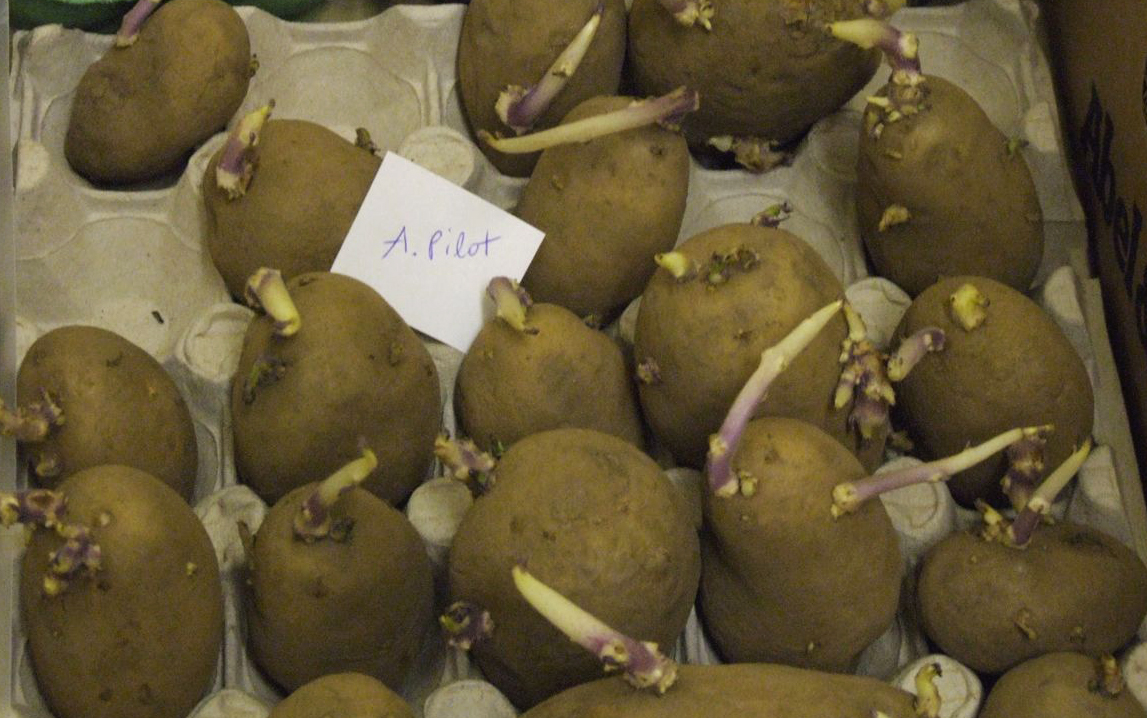
One of the first things planted this year are potatoes. Here is a picture of them occupying a large space of the kitchen floor.  This process is called chitting and allows them to grow little green shoots, which helps them grow faster. We planted a row of Maris Piper and a row of Desiree potatoes.  Maris Piper and Desiree are both main crop variety which will be ready to harvest in June-July. I think Desiree was the organic variety, but I am to lazy to walk to the garage to check the bags and labels.

But before the spuds went a row of carrots (Mr Fothergill's, Early Nantes 5) with a row of onions (Homebase home-brand Stuttgarter Riesen) next to the carrots them to keep the carrot-fly away.

The front of the allotment is full of new marigold seeds and a mix of field flowers to attract bees and other good insects. Plus a Lidl (cheap supermarket) budget brand summer flower mix.  Marigold is meant to deter animals and I am hoping that means no dogs and cats would be wondering around the allotment.  

We've planted quiet a few rows of Gigante di Napoli parsley - seeds left over from last year, purchased at the Real Food Festival in Earls Court, London.  Last year this parsley grew like mad.  It was not exactly 'gigante', but very tasty.  In the parsley box, we've planted some dill randomly amongst the other herbs surviving the winter - not sure if these seeds collected from last year's plants will actually grow.  The main plan this year is to continually plant herbs throughout the summer, so I have small batches of them to use all the time and not a plantation of dill or parsley in one go. We have made a patch ready for the pumpkin seeds, but did not get very far with planting - perhaps this weekend...? Meanwhile all the weeds are flowering and attracting these bumble-bees that sound like small helicopters!


Never mind, since the weeds are all prostrate - ground covering - and seem to come out reasonably easy. With such a large plot of weeds, the plan is to only clear the area immediately for working on, but that's still quite a lot! But with so much space, we'd be made not to go nuts with planting food! Every week, something new, and every month a new set of spuds and root veg! That should be a great harvest!

Thursday, 28 October 2010

The Last of Zucchini (Courgettes)


It is official - our zucchini (courgette) crop is well and truly over. Each of the 6-7 plants produced many many zucchini and I had to be ever so inventive with the different ways they can be incorporated in recipes.  One thing we did not try though and will next year is cooking with zucchini flowers.  Maybe in a tempura batter or similar - don't have any recipes at the moment to start off with.


These photos are taken in September and by now the plants are shriveled small and frost-bitten and flopped on the ground.


Amongst many inventions is the Zucchini 'Lasagna'.  I used slices of zucchini as layer divisions and added canned tomato, fried onions, stale white bread, lots and lots of parsley, lots of cheese and smoked paprika.  variations included a layer of spinach, cooked carrot, celery leaves or marjoram (from our allotment).


Wednesday, 15 September 2010

August


Our August update will have to follow in several installments as this was a very busy month on the allotment. However, here is a synopsis:
  • We started digging out onions.
  • We had zucchini, parsley, raspberries in abundance.
  • Out of a whole row of beetroot, we harvested 2 and have 3 more in the ground. A little disappointing on the quantities there, but the flavor makes up for it.
  • In addition, we invented many recipes for all the potatoes and zucchinis. Every recipe that could do with a spoonful of parsley - got several cups of it.
  • It was a bit hard to work out what can be planted in August. We have planted more potatoes, which by now are close to flowering. Our runner beans were planted in early August and now are close to harvest. (In fact, collected a handful tonight - shall steam them for dinner tomorrow.) We planted more coriander, rosemary and three rows of lettuce.

Wednesday, 4 August 2010

Jam Session - Spicy Version

Jam - The Spicy Savory Version

Various version of this have been made in my family and I have also sampled this type of jam elsewhere. It is like a chutney, except the spices are not particularly oriental and the finished product tastes more like a concentrate ridiculously tasty thick soup. It is great as a condiment to meals, fantastic on a piece of toast with melted cheese on top or as an ingredient in bakes and casseroles. In fact, I buy bread-rolls - halve them, take out some of the soft center, spread a little bit of tomato puree or tomato pizza base and fill the rest with the spicy savory jam and then grill it with cheese on top. Here is the recipe!


3 kg tomatoes (diced in small cubes, with hearts removed!)
400 g carrots (from our allotment!) (grated)
300 g celeriac (grated)
100 g celery stems (chopped)
200 g parsley roots (from our allotment!)(grated or can be crushed and chopped)
150 g onions (chopped)
150 g sugar
70 g salt

Simmer for 1 to 1.5 hours

60 g vinegar
6 g chili pepper (ground)
5 g black pepper (ground)
50 g celery leaves
100-150 g parsley leaves (from our allotment!) (chopped)

Cook for 30minutes or more

I made three pots full of jam from the above ingredient, although I added far more parsley to one pot and called it Mix II, Mix I had more chili and Mix III was not as exciting so I added some oak smoked Welsh salt to it and mixed some of the Mix II in it... anyhow - the sterilizing of the jars and filling jars is the same as described in the previous post on regular jam. I can imagine that it not that easy to get hold of parsley root if you do not grow your own parsley, but I believe the above recipe is flexible with ingredients, amounts and chili.


This volume of ingredients gave us 10 jars, from pickle-jar size to jam-jar size.

Wednesday, 14 July 2010

Zucchini


One of the vegetables that like our garden and has grown increasingly fast is zucchini. Made little hills, so that rain water drains away and zucchinis do not sit in the water. Very nice flowers too. We just ate our first home-grown zucchini - pasta, crushed tomato, our own parsley and zucchini - lovely!